Microlightning in Water Droplets Could Explain the Origin of Life on Earth

Life on Earth may have emerged not from a single, dramatic lightning strike but through countless tiny electrical discharges occurring in water droplets. Research indicates that microlightning, generated by crashing waves or waterfalls, could have led to the formation of essential organic molecules. Scientists have long debated how life began, with theories suggesting that lightning […]

Continue Reading
NASA’s Space Station Research Aids Lunar Missions With Key Technologies

Scientific research aboard the International Space Station continues to contribute to lunar exploration, with recent experiments supporting advancements in space weather studies, navigation, and radiation-resistant computing. Firefly Aerospace’s Blue Ghost Mission-1 successfully landed on the Moon on 2 March 2025, carrying three experiments influenced by space station research. These include the Lunar Environment Heliospheric X-ray […]

Continue Reading

ISRO SpaDeX Successfully Undocks, Advancing Chandrayaan-4 & Gaganyaan

The Indian Space Research Organisation (ISRO) has successfully completed the undocking of its Space Docking Experiment (SpaDeX), marking a significant step towards future space missions such as Chandrayaan-4 and Gaganyaan. The announcement was made earlier today, confirming the controlled separation of two satellites, a crucial milestone in India’s space docking capabilities. With this achievement, India […]

Continue Reading

NASA’s MMS Mission Marks 10 Years of Magnetic Reconnection Discoveries

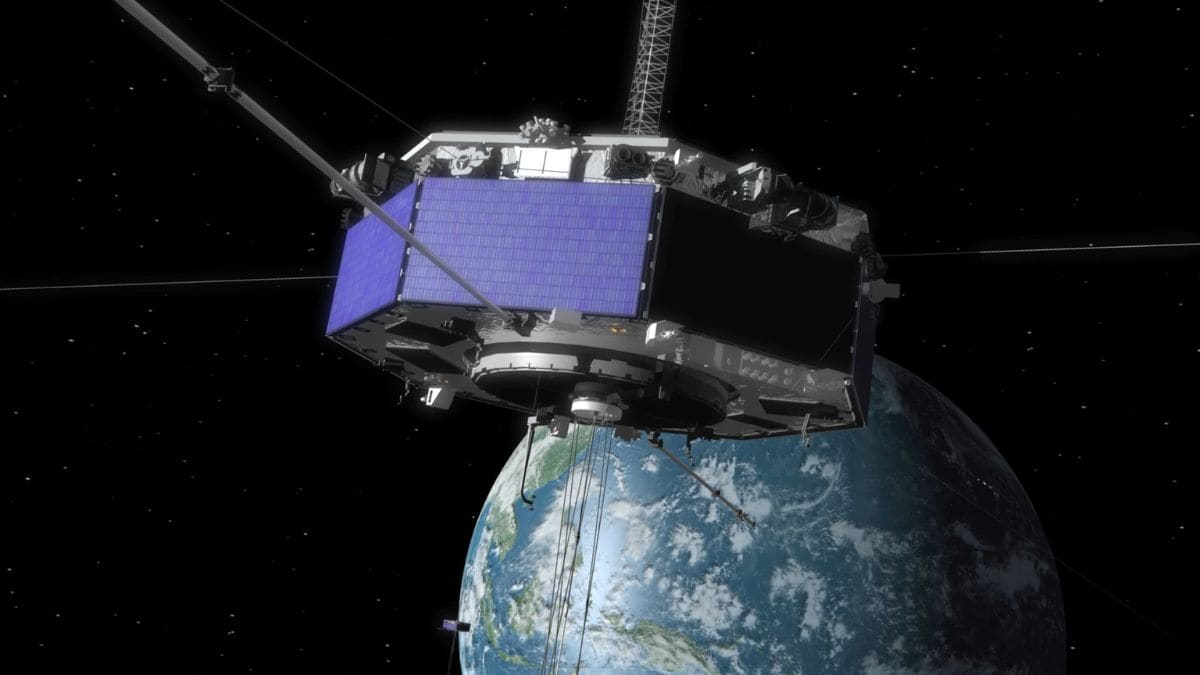
A decade after its launch on March 12, 2015, NASA’s Magnetospheric Multiscale (MMS) mission has significantly advanced the understanding of magnetic reconnection, a fundamental process occurring throughout the universe. Magnetic reconnection takes place when magnetic field lines break and realign, releasing massive amounts of energy. Around Earth, a single event can generate as much energy […]

Continue Reading

SpaceX Falcon 9 Successfully Deploys NASA’s SPHEREx Telescope and PUNCH Probes

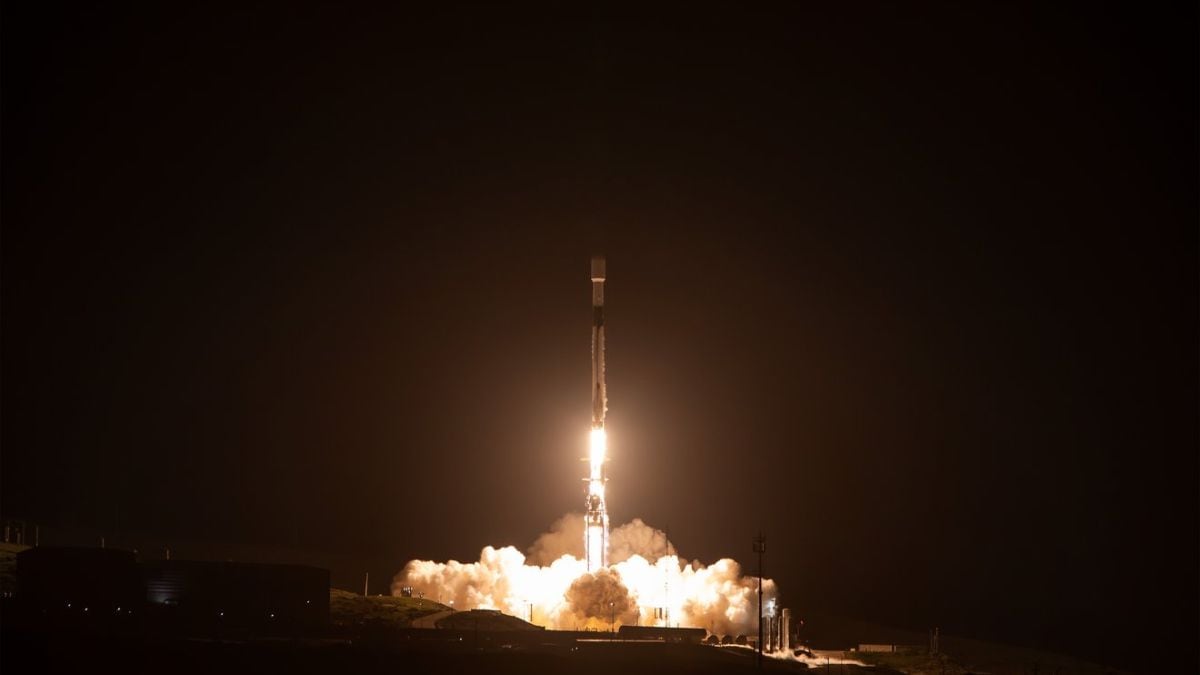
A SpaceX Falcon 9 rocket lifted off from Vandenberg Space Force Base, California, at 11:10 p.m. EST, carrying NASA’s SPHEREx space telescope and the PUNCH solar mission. The dual payload mission successfully reached orbit, marking a major milestone for NASA’s ongoing space exploration efforts. Engineers and scientists involved in the missions expressed excitement as the […]

Continue Reading

ISRO Expands with Two Launchpads, Chandrayaan-4 to Launch in 2028 with Lunar Sample Return Mission

The Indian Space Research Organisation (ISRO) is set to enhance its launch infrastructure with two new launchpads, expected to be operational within two years. One facility will be developed at Sriharikota, Andhra Pradesh, while the other will be constructed at Kulasekarapattinam, Tamil Nadu. These additions are aimed at supporting the increasing frequency of space missions […]

Continue Reading

Mysterious Planetary-Mass Objects May Form in Young Star System Clashes

Free-floating planetary-mass objects have been observed drifting through young star clusters, raising questions about their origins. These objects, with masses around 13 times that of Jupiter, have been identified in large numbers within regions like the Trapezium Cluster in Orion. The discovery of 40 binary planetary-mass objects, referred to as Jupiter-Mass Binary Objects (JuMBOs), has […]

Continue Reading

World’s First Modular Quantum Computer Operates at Room Temperature

A quantum computer capable of functioning at room temperature has been developed, marking a major advancement in the field. Named Aurora, the system operates using light-based qubits and connects multiple modules through fibre optic cables. This approach aims to address key challenges in quantum computing, including scalability, fault tolerance, and error correction. The technology, designed […]

Continue Reading

First Modular Quantum Computer Works at Room Temperature Without Cooling

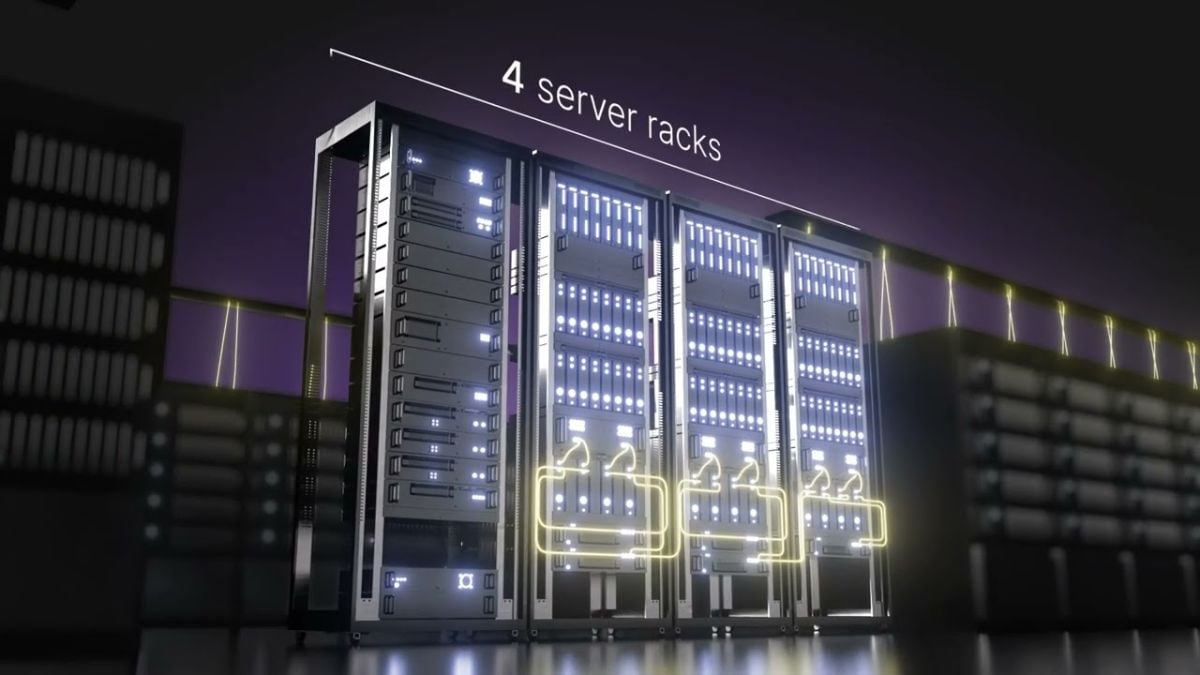
Scientists have successfully developed a quantum computer capable of operating at room temperature, marking a significant step towards scalable and networked quantum computing. The system, named Aurora, is designed to function using interconnected modules, eliminating the need for extreme cooling, which has been a major hurdle in quantum computing. The technology leverages photonic qubits, which […]

Continue Reading